What Does a Plasterer Actually Do? A Homeowner's Guide
What does a plasterer actually do? A plain-English guide to skimming, boarding, rendering and repairs from R.Q Plastering in Ilkeston.

What a plasterer actually does
A plasterer works on walls, ceilings and external surfaces to create a smooth, solid finish that is ready for decorating or left as a protective coat outside. That covers everything from skimming a single wall after a repair to boarding out an entire new-build extension and rendering the outside of a house. It is a skilled trade, and one that is easy to underestimate until you watch someone do it well.
At R.Q Plastering & Rendering Services, based in Ilkeston, that is exactly what we do. Run by Richard, the business covers homes and properties within 30 miles of Ilkeston, taking on all aspects of plastering and rendering, new build and restoration works.
The two main sides of the trade: internal and external
Most people think of plastering as an indoor job, and a lot of it is. But the trade splits fairly cleanly into two areas.
Internal plastering covers:
- Skimming walls and ceilings (applying a thin finish coat over existing surfaces or new plasterboard)
- Replastering rooms where the old plaster has blown, cracked or been damaged
- Boarding out ceilings and walls with plasterboard before skimming (this is sometimes called dry lining)
- Making good after other trades, such as when an electrician has chased cables into a wall and left channels that need filling and finishing
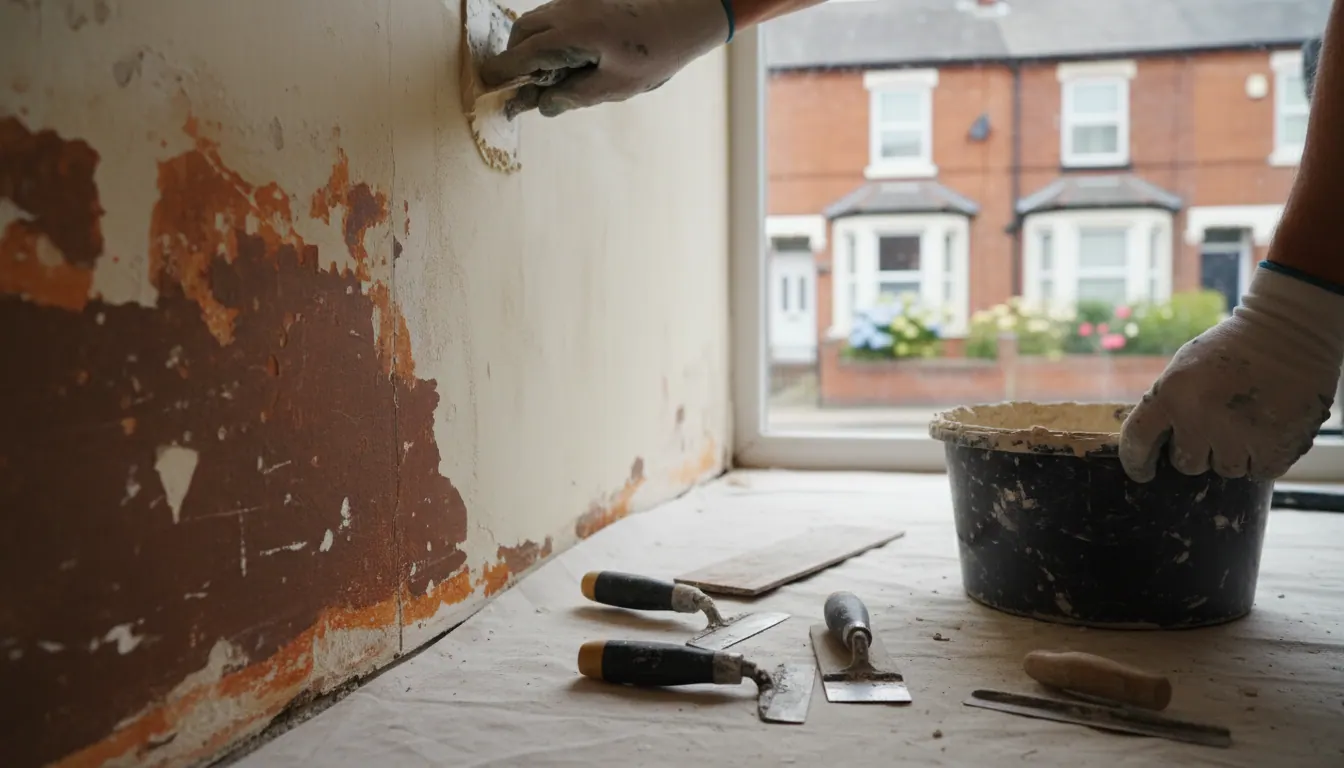
- Repairs to damaged or crumbling plaster on older properties
External rendering covers:
- Rendering the outside of a house, bungalow, extension or outbuilding
- Re-rendering walls where the old coat has cracked, blown or let in water
- Repairing sections of render without stripping the whole wall
Both sides of the trade matter for homes across Erewash and the wider area. Older properties often need both: replastering inside where walls have deteriorated over decades, and fresh render outside to keep the weather out.
What does skimming actually mean?
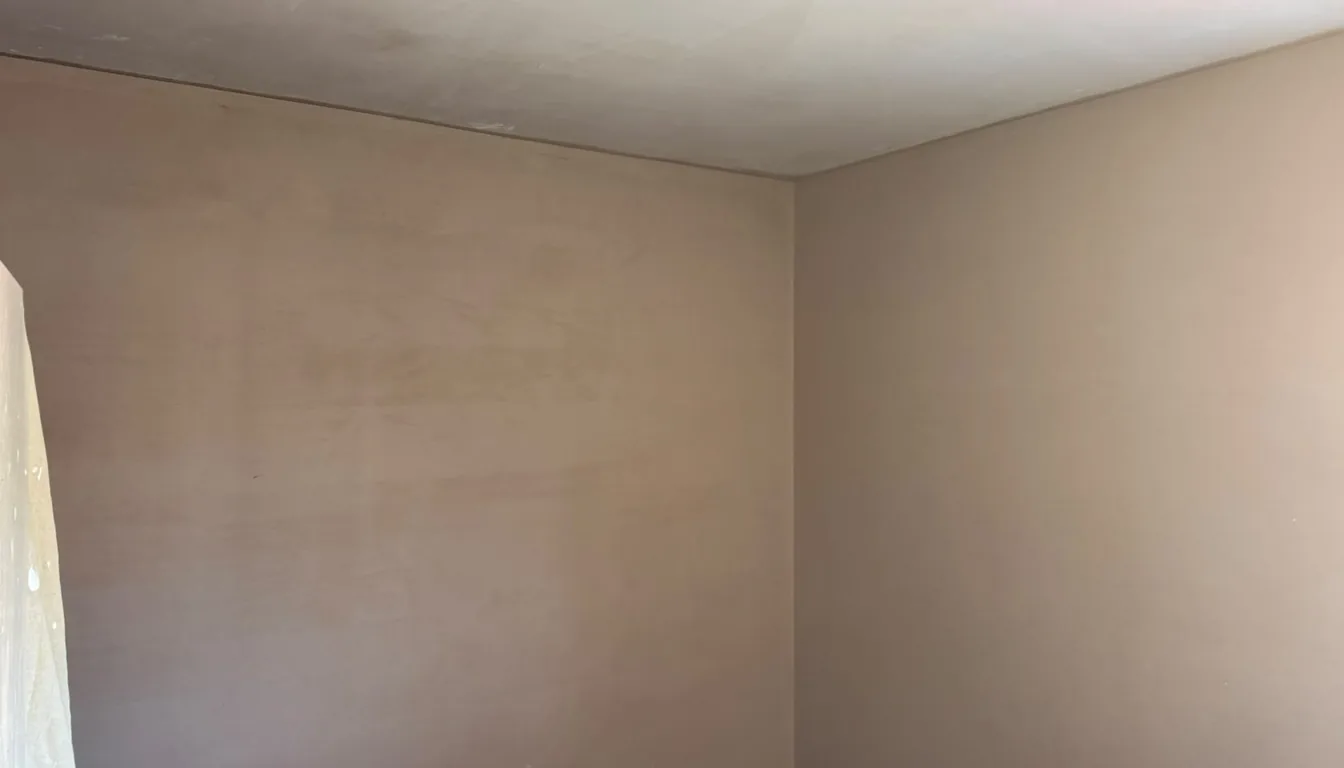
Skim coat, or skimming, is the thin finish layer of plaster applied over a surface to give a flat, smooth result. It is what makes a wall ready to paint. The skim coat goes over either existing plaster (if the wall is being refreshed) or over plasterboard (if the room has been newly boarded).
It sounds simple, but getting it right takes real skill. The material sets quickly, so a plasterer has to work fast and confidently, keeping a consistent thickness and blending each pass without leaving lines or ridges. Done well, it is almost invisible once painted. Done badly, every imperfection shows up the moment the light catches the wall.
Plasterboarding and dry lining
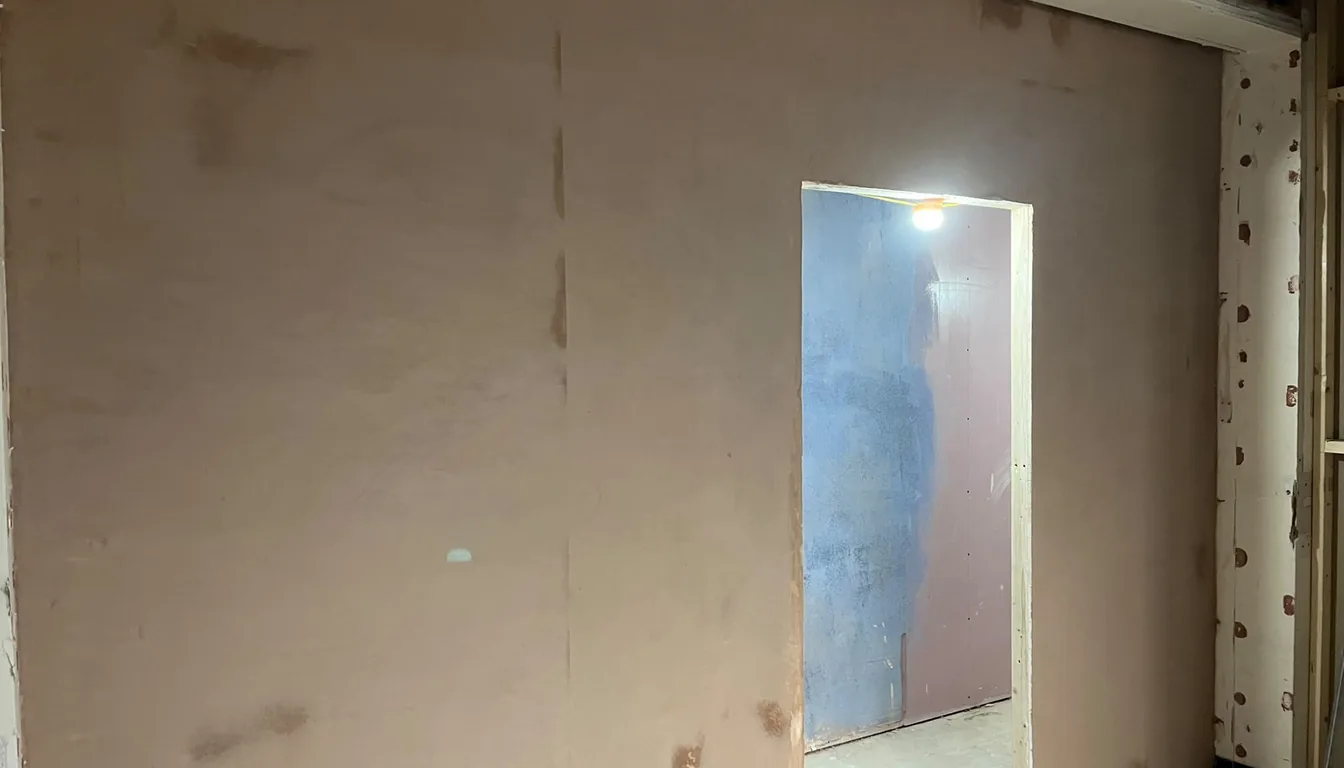
Plasterboarding (also called dry lining) is the process of fixing sheets of plasterboard to walls or ceilings before they are skimmed. It is standard practice in new builds and extensions, and it is also used when old walls are too uneven or damaged to plaster directly.
Boarding a ceiling or wall properly is a job in its own right. The boards need to be cut accurately, fixed securely and jointed correctly so the skim coat sits flat. Get the boarding wrong and no amount of careful skimming will hide it.
For anyone building an extension in Long Eaton, converting a loft in Heanor or doing a garage conversion anywhere in the Erewash area, plasterboarding is almost certainly part of the job.
Rendering: why the outside of a house matters
Render is the coat applied to the outside of a wall. It protects the brickwork or blockwork beneath from rain, frost and general weathering, and it gives the house a clean, finished appearance.
Render is applied in coats, with the number of coats depending on the wall and the condition of what is underneath. The finished surface can be smooth or textured.
Render does not last forever. Over time it can crack, particularly around window and door openings, or it can start to blow (separate from the wall behind it). When that happens, water can get in behind the render, which causes further damage. Catching it early and having the affected sections repaired is far less disruptive than waiting until the whole wall needs stripping and starting again.
For homes across Derby, Nottingham and the surrounding parts of Derbyshire and Nottinghamshire, keeping on top of render is a practical part of maintaining the building.
New build plastering versus restoration work
These are quite different jobs, even though both involve plaster.
New build plastering is about working to a programme alongside other trades. The walls and ceilings are freshly boarded, everything is square and new, and the job is to work efficiently through the rooms and get a consistent finish throughout. Extensions and conversions fall into this category too.
Restoration and repair work is more varied and often more challenging. Older walls are rarely flat or square. Plaster may have blown in patches, or there may be layers of old coatings built up over many years. Making good after rewiring is a common example: an electrician cuts channels and chases for cables, then leaves. The plasterer comes in afterwards to fill, patch and skim so the wall looks as though nothing happened.
Getting a good result on older or damaged walls takes experience and patience. It is not just about applying plaster; it is about reading the wall, understanding what is underneath and choosing the right approach for that specific surface.
How to tell what your walls or ceilings actually need
Here is a practical guide to the most common situations:
- Cracks in plaster: Fine hairline cracks are usually surface shrinkage and can be filled. Wider cracks, or cracks that keep coming back, may mean the plaster has moved or there is a problem with the substrate beneath.
- Hollow or booming sound when you tap the wall: This is blown plaster. It has lost its bond with the wall behind it. Blown plaster needs to be cut out and replaced rather than just filled over.
- Rough or uneven surface: If a wall has been patched many times, or if the original plaster was never great, the surface may be too uneven to paint well. A full skim coat will level it out.
- Damp patches: These need the source of the damp to be sorted first, by the appropriate trade, before any plastering is done. Plastering over active damp is a waste of time and money.
- Ceilings with sagging or cracks: Older ceilings can fail over time. Sometimes a section can be repaired; in other cases, boarding over or replacing the ceiling is the better option.
If you are not sure what your walls or ceilings need, the sensible first step is to get someone in to have a look.
Getting ready for a plasterer: a few practical tips
You do not need to do anything technical, but a bit of preparation makes the job go more smoothly:
- Clear the room as much as you can. Plaster dust travels further than you expect.
- Make sure any other trades, such as your electrician or plumber, have finished their work on that room before the plasterer arrives.
- If you are having external rendering done, check that gutters, downpipes and anything fixed to the wall are accessible.
- Fresh plaster needs time to dry fully before you decorate. Do not rush to paint it.
Frequently asked questions
What is plastering?
Plastering is the trade of applying plaster or render to walls, ceilings and external surfaces to create a smooth, durable finish. Internally, it prepares surfaces for decorating. Externally, it protects the building from the weather. The work ranges from a small repair to a single wall right up to plastering an entire new-build house from scratch.
Do I need a plasterer or can I do it myself?
Small repairs, such as filling a crack or patching a small hole, are within most people's ability. But skimming a wall or ceiling to a smooth finish is a genuinely skilled job that takes considerable practice to do well. Most homeowners who try it end up with a result that shows. For anything beyond minor filling, it is worth getting a proper plasterer in.
Get a quote for plastering or rendering within 30 miles of Ilkeston
If you have walls or ceilings that need attention, or you want to talk through what is involved in a rendering job, we are happy to come and have a look. We cover Ilkeston, Long Eaton, Heanor, Derby, Nottingham and everywhere within 30 miles of Ilkeston. Richard works between 7am and 7pm.
You can call us on 07492 266834, email rqplasteringservices@hotmail.com, or get in touch using the contact form on our website. No pressure, just a straight conversation about what the job involves.