Why Your Plaster Isn't Sticking, and How to Fix It
Plaster not sticking to the wall? The real causes and what to do about it, from R.Q Plastering in Ilkeston, covering homes within 30 miles.

Plaster that won't stick is more common than you'd think
Fresh plaster pulling away from the wall, sliding off before it sets, or cracking and falling away in chunks some time later. It's frustrating, and it always seems to happen at the worst moment. The good news is that plaster fails to stick for a fairly small set of reasons, and once you know what's behind it, the fix is usually straightforward.
R.Q Plastering & Rendering Services is run by Richard, based in Ilkeston and covering homes within 30 miles, including Erewash, Derby and Nottingham. Plaster that won't stick is a common problem, so here's a plain-English rundown of why it happens and what needs to be done.
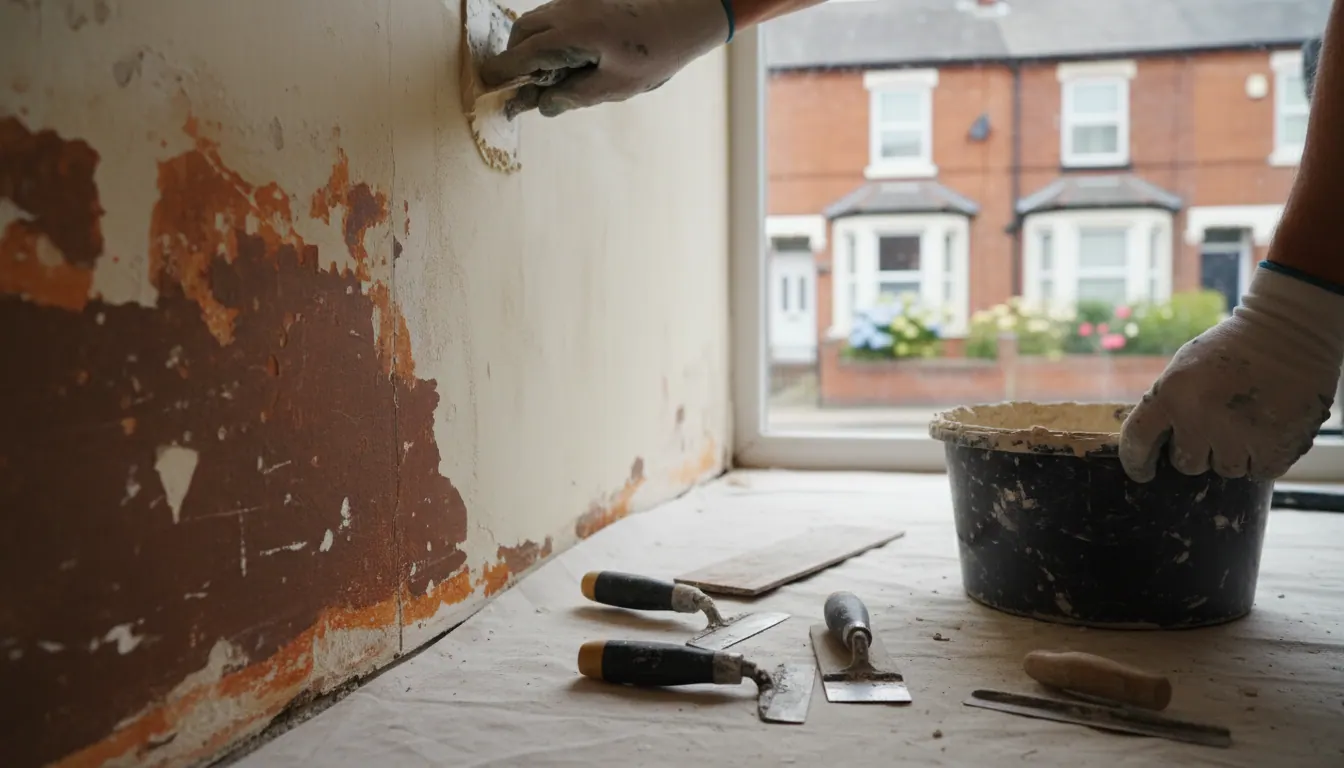
The surface wasn't prepared properly
This is the single biggest cause. Plaster needs something to grip onto. If the background surface is dusty, dirty, painted, very smooth or has old loose material on it, the new plaster simply won't bond.
Common preparation failures include:
- Leaving a layer of dust or debris on the wall before plastering
- Plastering over paint without treating the surface first
- Not removing crumbling or blown plaster before applying fresh material
- Skipping a bonding agent (sometimes called a PVA coat) on very smooth or dense backgrounds
Blown plaster is the term for old plaster that has separated from the wall behind it. Tap the wall and listen for a hollow sound. If you hear it, that section needs to come off before anything new goes on. Plastering over blown plaster is like building on sand.
Suction: too much or too little
Suction is how much moisture the background pulls out of fresh plaster. Get it wrong in either direction and the plaster won't stick properly.
Too much suction happens on very dry, porous surfaces like old brick, bare blockwork or plasterboard. The wall drinks the moisture out of the plaster too fast, before it has a chance to bond. The result is plaster that dries too quickly at the back, goes brittle and either cracks or pings off.
Too little suction is the opposite problem. Very dense, smooth or sealed surfaces (like painted walls or certain types of concrete block) don't absorb enough moisture. The plaster sits on the surface rather than keying into it, and eventually slides or falls away.
The fix for high suction is to dampen the wall or apply a diluted bonding agent before plastering. The fix for low suction is to apply a bonding agent that gives the plaster something to grip. Getting this balance right is one of those things that comes with experience. It's not something you want to guess at.
Damp patches on new plaster and what they mean
If you notice damp patches on new plaster, it doesn't always mean there's a leak. Fresh plaster is wet by nature and needs time to dry fully. Dark patches that gradually lighten and disappear as the plaster dries are usually just the plaster drying out unevenly, which is normal.
But damp patches that stay, spread, or keep coming back after the plaster has had a reasonable time to dry are a different matter. They can point to:
- Water getting in from outside (a cracked render, a leaking gutter, a failed window seal)
- Rising damp from the floor
- A plumbing issue behind the wall
If that's the case, plastering over the problem won't solve it. The source of the moisture needs to be dealt with first by the relevant trade, whether that's a roofer, plumber or builder. Once the wall is dry and the cause is fixed, it can be replastered properly.
One common situation is chimney breasts that stay damp. Old chimneys that are no longer in use can draw moisture in from the outside, especially in autumn and winter. If you're planning to replaster a chimney breast and the wall feels damp or the previous plaster has failed, it's worth investigating the chimney itself before committing to new plaster.
The wrong type of plaster for the background
Not every plaster suits every surface. Using the wrong product for the background is a less obvious cause of adhesion failure, but it does happen.
Different backgrounds need different approaches. Plasterboard, for example, has a slightly different surface to brick or block, and the way you prepare and apply plaster to it differs accordingly. Mixing up products, or using a finish coat directly on a background that needs a base coat first, can cause the whole lot to fail.
This is one reason why watching a few videos online and having a go yourself doesn't always end well. Knowing which product to use, in what order, on which surface is a fundamental part of the trade. If you're not sure, it's genuinely better to call a plasterer than to strip it all back and start again.
Temperature and ventilation during drying
Plaster doesn't like extremes. If the room is too cold, the plaster sets too slowly and can fail to bond properly. If it's blasted with a heater or left in direct sunlight, it dries too fast on the surface while staying wet underneath, which causes cracking and poor adhesion.
Fresh plaster needs time to dry fully before you decorate. Painting over plaster that hasn't dried is a common mistake. The moisture trapped behind the paint has nowhere to go, and the result is paint that bubbles, peels or simply won't stick. If you've ever wondered why your paint isn't sticking to the wall after replastering, this is usually why.
Keep the room at a steady, moderate temperature, open windows slightly to allow moisture to escape, and don't rush to decorate. Once the plaster has turned from dark to a consistent light colour across the whole surface, it's getting close to ready.
Is it hard to fix plaster walls?
Honestly, it depends on the extent of the problem. Small hairline cracks can often be filled without replastering the whole wall. But if the plaster is blown, if there are large areas coming away, or if the original work was done badly, a proper repair job means taking it back to the background and starting again.
Trying to patch over failed plaster rarely works long term. The new patch bonds to the old plaster, not the wall behind it, and if that old plaster is loose, the patch will eventually fail too. Doing it properly means removing what's failed, preparing the background correctly and applying fresh plaster in the right way.
If you're dealing with a wall that keeps causing problems, or plaster that has failed more than once in the same spot, it's worth getting a plasterer to take a look rather than keep patching. R.Q Plastering covers homes within 30 miles of Ilkeston, including Erewash, Long Eaton, Heanor, Derby and Nottingham.
For a broader look at what plastering work actually involves, our guide What Does a Plasterer Actually Do? A Homeowner's Guide is a good starting point. And if you're dealing with a crack, a patch of blown plaster or another small repair, take a look at Small Plaster Repairs: When to DIY, When to Call a Plasterer.
Frequently asked questions
Why does plaster keep falling off the wall?
The most common reasons are poor surface preparation, incorrect suction control, or plastering over a background that was damp or loose to begin with. If plaster keeps failing in the same spot, there's usually an underlying issue, whether that's blown plaster that wasn't fully removed, a damp problem, or a surface that wasn't treated properly before the new plaster went on. Getting to the root cause is the only way to stop it happening again.
Why is my paint not sticking to the wall after replastering?
Almost always, this comes down to decorating before the plaster has dried fully. Fresh plaster holds a lot of moisture, and if you paint over it too soon, the paint seals that moisture in. It then pushes back through the paint as it tries to escape, causing bubbling, peeling or poor adhesion. Wait until the plaster is completely dry, and consider applying a mist coat (a thinned-down first coat) before your normal paint, as this lets the plaster breathe while giving the paint a better grip.
Can damp cause plaster not to stick?
Yes, absolutely. Plaster applied to a damp wall often fails to bond properly, and even if it appears to stick at first, it can crack, bubble or fall away once the moisture works its way through. The important thing is to identify and fix the source of the damp before any plastering takes place. Replastering a damp wall without addressing the cause is a short-term fix at best.
Why is plaster on a chimney breast not drying properly?
Chimney breasts can hold moisture for several reasons. An unused chimney that hasn't been capped or sealed can draw in rain and condensation. The brickwork inside is often old and porous. If plaster on a chimney breast stays damp or keeps failing, it's worth checking the chimney itself before replastering. Once the moisture source is dealt with, the wall can be prepared and plastered in the normal way.
Get a quote for plaster repairs within 30 miles of Ilkeston
If you've got plaster that's failing, walls that keep causing problems, or you're simply not sure what's going on and want someone to take a look, get in touch with us. Richard covers Ilkeston, Erewash, Long Eaton, Heanor, Derby, Nottingham and everywhere within 30 miles, working between 7am and 7pm.
You can reach us by phone on 07492 266834, by email at rqplasteringservices@hotmail.com, or by filling in the form on our website. Get in touch with us here and we'll talk through what the job needs.